|
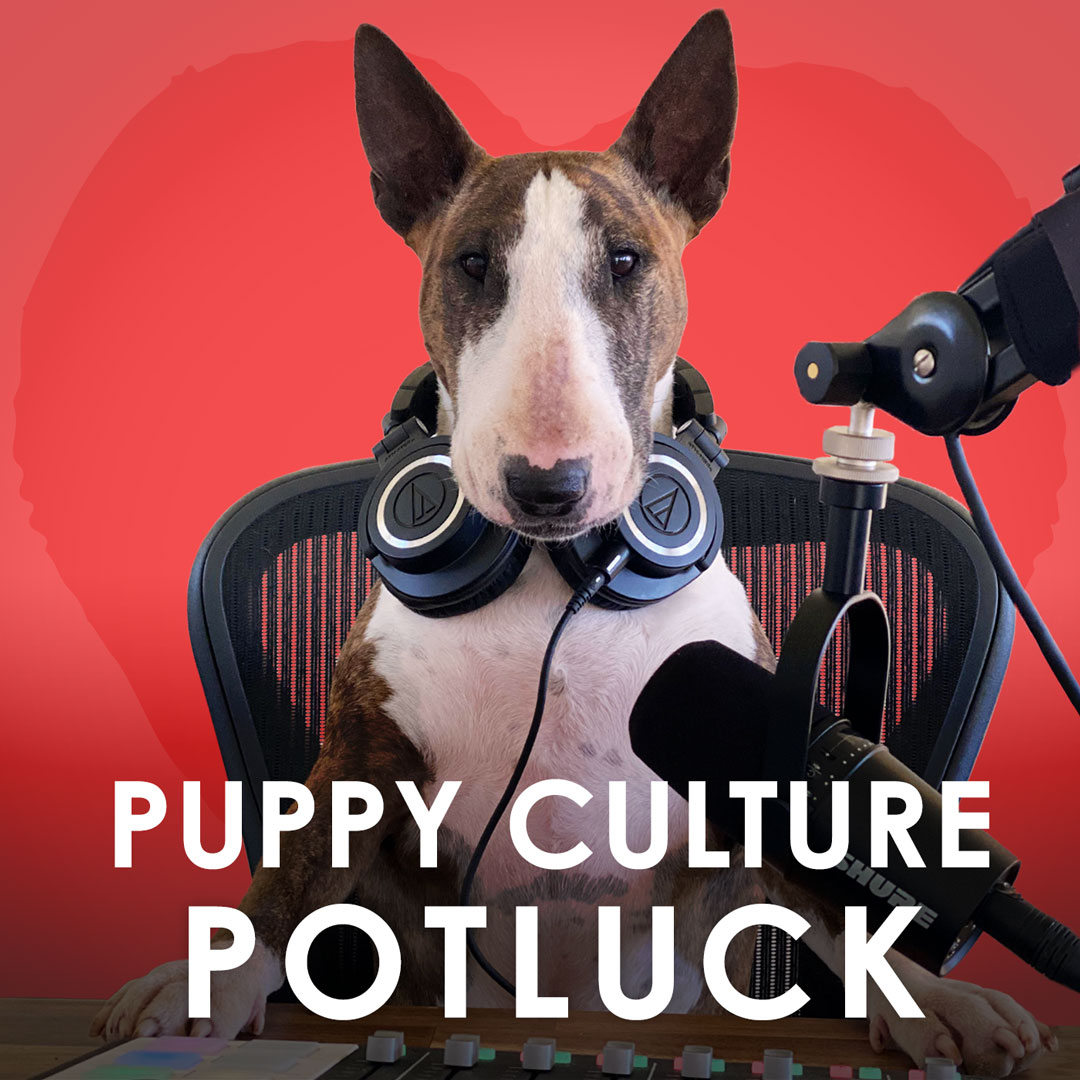
Puppy Culture Potluck SeriesYou bring the topics, we bring the discussion.
No time to read our Puppy Culture Discussion group every day? No problem! Now you can get highlights of the discussion group in podcast format.
I’m going to be grabbing questions from the discussion group that sparked interesting discussion and talk about them on air.
Who knows, some guests may drop in as well…
|
Episode 56 - Wiggly Show Puppy Making You Crazy? Relax, They Probably Need More Time than Training10/28/2026
I’ve brought along many, many, puppies, and a 16-week-old puppy that is happy to see a judge is a very positive sign for that puppy’s show career. And I have enough experience to know that this is a behavior that will wane as the puppy grows to an adult and becomes habituated to the show experience.
Sure, you need to gently mold the puppy over time, but by the 100th time a judge or handling instructor approaches them, they’ll be old enough and hungry enough to ignore that person. So it’s not like you really need to do any special training or program for this issue. It’s more about accepting it as normal. But puppy owners don’t always have that long view, and they seek ways to “fix” this perceived problem. And we have to honor the emotional needs of puppy owners and give them some training to do. Because if we don’t give them some positive training techniques, they’re liable to fall prey to aversive training for their wiggly puppies. So, in this episode, I talk about what you can do specifically to work on this behavior, what training programs we offer for this, and also the reasons why this is a self limiting problem IF you don’t do the wrong thing and create bad feeling for the puppy with ill-advised handling and corrections.
Listen wherever you get your podcasts, and subscribe so you never miss an episode!
    
   
To read the transcript for this episode, click the link below.
 Transcript - Episode 56I'm Jane Messineo Lindquist., and this is a Puppy Culture Potluck podcast. You bring the topics, we bring the conversation. This episode is about wiggly puppies. When the judge is going over them in the confirmation ring. And here's the question. I have been following the Killer Free Stacks program and recently started Stack and Deliver. My four and a half month old puppy is doing wonderfully with her free stack and hand stack, all with age appropriate expectations. She's still a joyful little puppy, and I'm perfectly happy with that. Where I'm struggling is with her absolute exuberance. When someone new wants to touch her. She loves people, and the thought of someone giving her attention is almost too exciting to contain. While I don't expect her to stand perfectly still at this age, standing on her hind legs in an attempt to kiss the judge's face during an exam isn't exactly ideal. A handling instructor suggested that I hold her head firmly and force her to settle. I let the instructor try this approach, but I was very uncomfortable with it. My puppy became visibly upset and began grinding her teeth while being restrained. It just didn't feel right. She's a terrier. Push her and she'll push back harder. She's a puppy culture puppy who's incredibly confident, happy and enthusiastic about life. Those are qualities I absolutely want to preserve, not diminish. I want her to learn. That being examined is simply part of the show experience, without losing the joy and confidence she brings to the ring. How can I help her channel that excitement into a more manageable judge's examination without suppressing her wonderful personality? We do work on meeting strangers on walks and keeping her feet down, but the judge touching her all over while keeping her feet planted seems to be too much. I'd love to hear your suggestions. Okay, me again. As so often you hear me say in these podcasts, there is a direct answer to her question. Meaning to say there is a path okay to teaching a puppy how not to be wiggly and keep their feet down for the examination in the conformation ring. And I'm going to talk about that. But I think that's missing the point here. I think that's missing the key learning moment. And the key learning moment is that for an 18 week old puppy, you don't have to worry about this behavior, okay? This is a positive. If this puppy is displaying this behavior. Many people wrote in in fact, the vast majority of people and there were 40 comments wrote in saying I would be delighted with this behavior in the ring. And several of us are judges, AKC judges, and we all wrote we would be delighted with a four and a half month old puppy that displayed this kind of behavior. So let me do a little plug here for the AKC’s baby puppy program. The 4 to 6 month old puppy. I've talked about it before. I just don't know why it's not a more popular program. And when I say popular, I mean why more people don't take advantage of this golden opportunity to get their puppies out and have good low pressure experiences in the venues that they're ultimately going to be expected to show in. You really just cannot duplicate this. And it's a genius program that everybody should be doing, in my opinion. But it's just such a great segue for puppies where they can do this kind of thing, okay. Where the judge is not going to expect them to stand still for exam. There are no points involved. The host clubs are normally going to select judges that are good with puppies, and are going to make it a good experience. Everyone, the AKC included, understands that the whole point of this 4 to 6 month old puppy Show program is to give puppies a good experience. So a puppy displaying this kind of behavior is not a problem, and not something you really need to worry about. This is a win if you have a puppy that's happy to meet the judge. But you know, even if the puppy owner can get over this right and understand that this is a positive, that their puppy is happy to meet the judge in the back of the puppy owner's mind. This puppy owners mind and most puppy owners minds is going to be. But what's going to happen when the puppy is six months a year old? What if the puppy continues to do this? And to me, this falls under the heading of not solving problems that you don't have. Okay, it's age appropriate behavior for a puppy that's 18 weeks old. We're not going to worry about it. If you're doing a modicum of training. It's going to go away. Okay. So at the outset, I want anyone listening to this to take it to heart that this is not a problem and it's something that is going to naturally evolve. It's not a problem that you have to solve. Now, that's not to say that you don't have training and work to do. You do. But your criterion for now, with a 4 to 6 month old puppy is not, to try and train an adult type show performance in the ring. It's just to have the experience be positive, because as many people said, and I'm going to read some of these wonderful comments, it is so easy to shape a puppy down that's too excited and almost impossible to shape a dog up that has been suppressed. Okay, at this point, I know that the puppy owners have heard what we all have to say about this as experienced people, and they're going to find it hard to emotionally accept it because they don't see the way out. So I'm going to make a deal with you if you're listening to this and you're thinking, yeah, but oh, I don't know, I don't. But how I'm going to tell you how. Okay, if you will accept that an 18 week old puppy putting their feet up and trying to lick the judge's face is a positive thing. Is a win in the show ring for you? Then I will tell you how that's going to stop happening. And the way it's going to stop happening is a trifecta of repetitions over time. Maturity and habituation. What do I mean by that? The more you go to handling class, the more you go to 4 to 6 month old puppy competitions. The more times your puppy goes into the ring and is like, oh yeah, this is going to happen. And then this is going to happen and then this is going to happen. The less likely your puppy is going to be to wiggle and fuss. A lot of this does have to do with maturity because as puppies mature, their reinforcers shift and it's going to be easier for you to provide something that's higher value than interaction with the judge. Right now, I'm sure this puppy owner is going in the ring with bait. There's food there, but the judge is just too exciting and the food really isn't that valuable. So how is that going to change? Let me explain. Reinforcers. We talk about this in puppy culture. Reinforcers are fluid. They change depending on the stage of development that the puppy is in. Tiny baby puppies their primary reinforcer. They're strongest. Reinforcers are social reinforcers. Why is that? Think about it. What is a baby puppy's best strategy for survival? Protection of the pack. They have no defenses. They need pack approval and acceptance to survive. Now that starts to change. Usually around 16 weeks old. Puppies start to be more food driven and less pack driven. And this is what they call the age of rebellion teenage rebellion, cutting teeth and cutting apron strings. But really, it's just a shift in reinforcers because the puppy is approaching something near adult mobility. They're starting to get in their adult teeth. They can defend themselves a little bit. So pack approval, while still very important, is not their only means of survival like it was when they were six weeks old. Okay, so what does that mean to you as a show handler? And what it means is what you have, which is food, is going to start being emotionally heavier than social reinforcers. Now it's not going to happen overnight. And again, this is where we just keep gently taking the puppy out, keep working on it, doing what we're doing, offering the puppy food for standing still, praising the puppy for standing still. But gradually it's going to sort of dawn on the puppy that yeah, this is the hundredth person that has come to see me. And you know what? That piece of steak in my owner's hand is actually really delicious. And I'm pretty hungry. But it's not something that happens all at once. Okay? It's not like some trick that you do, or some little thing, or a way that you hold the puppy's head. It's gradual repetitions over time and probably just doing what most people are doing, which is gently praising and reinforcing the puppy. When the judge approaches. So that is your maturity repetitions over time. And then it's habituation, which is as that reinforcer of food is growing in value naturally as the puppy matures. If you have done this enough time, the habituation that your puppy is experiencing is going to bring down the value of meeting a new person. Okay, not that they're not going to be happy to meet new people, but it's just not going to be so overwhelmingly exciting. So before you even get into any kind of structured program or definite training of this, there's a lot that's going to kind of solve itself by just gently knocking the edges off of it and exposing the puppy to it in a positive way, again and again. Now we do have a program called Attention is the Mother of all Behaviors that I use with all my puppies. I start at 16 weeks and I'm going to tell you what it is. The programs available at puppyculture.com. But here's a nutshell of what it is. It's teaching the puppy that distractions are cues for attention. What does that mean? It means that you start from however far away a person has to be for a puppy to maintain attention on you. First, you have to shape attention. Okay, with a clicker, you just you shape the puppy to look at you. You click, you treat, look at, you click, you treat. Then once you have the puppy looking at you, you have somebody all the way across the room just standing there. And you click and treat it the puppy maintains eye contact then. And that's, you know, the whole program. Very gradually you just approximate the person moving closer and closer and closer and then eventually touching the puppy. And every time the puppy maintains eye contact with you, you go ahead and click and treat. I know in the show ring you're not going to be locking eyes with your puppy. Doesn't matter. It's the concept. It's the concept that distractions are cues for attention. Whether the puppy is actually looking in your eyes or not. This is how you do it, but ultimately it's a concept that's going to carry over to when somebody approaches and starts touching the puppy. The puppy is going to just sort of roll their eyes at you like, oh, I get paid for that, right? But do not think that even if your puppy is perfect at doing this at home at 16, 18, even 20 weeks, that they're not still going to wiggle in the show ring. They are. But it's sort of like your wearing away at this from different edges. You're doing your habituation, you're getting your puppy out, the puppy's maturing, the puppy's developing more of a food drive. You're doing Attention is the Mother ... and, you know, one day the judge is just going to approach your young dog, and your young dog is going to just stand there and you're going to be like, wow, that was much less trouble than I thought it was going to be. So let's go to the comments. Here's one. I always allow a puppy the opportunity to enthusiastically greet the judge, then softly reset. Most judges seem to appreciate a happy puppy and give you the time to reset. Better to enjoy the exam than the alternative. They slowly learn to reset quicker and eventually don't break their stack better a slow process than make it uncomfortable for them. Yeah, this is a great point about allowing the puppy the opportunity to do what their impulses at the moment, because if you suppress it, if you successfully suppress it and don't let don't let the puppy jump, 1 or 2 things is going to happen. Either the puppy is going to want to jump more and get really desperate to do it, because now it has that forbidden fruit aspect. Or worse yet, the puppy could form a negative association with the judge and being examined. So neither one of these are good. This is why we get puppies out when they're very young, so they can sort of get this out of their system. So good point. There. Here's another. In my experience, that is completely normal behavior. At four and a half months, I would not do anything to subdue her. Now that my puppy has reached six months, she is naturally becoming calmer for exam. I never try to force her to settle. And frankly, if a judge gets upset at my friendly puppy, I wouldn't show to them again. As Jane said, it's much harder to fix a puppy that was overcorrected at a young age. Like puppies be puppies. And this woman wrote, as a judge, I would welcome such behavior in a puppy. And then somebody wrote in as in reply to that, at what age do you start finding it less acceptable? I have a six and a half month old puppy that is just starting in the normal classes. That is still very exuberant, not jumping and licking so much, but still very enthusiastic. Now this judge wrote in mind, all love to foster the judge, and I'd rather that than an unhappy dog that's tolerating it at best. Much harder to build up confidence. And I wrote it really depends on the judge in general. I'm never displeased by a dog that's super happy to meet me when I go over it, but bull terrier people do not take themselves very seriously. Some judges, yeah. You know, they really don't have tolerance for young dogs jumping on them. I would say when you're in the 4 to 6 month old puppy program, you're safe. But it raises a good point that you should curate your experiences for your young dogs. There are some judges I know that are just cranky judges that I am not bringing my puppies to. If you don't know who they are or you're not familiar with the judge, there are lots of great groups on Facebook. That great dog show judges. And you know, I'm not saying that you can take everything they say as gospel, but I do think you can get a good idea. By going on one of those groups as to whether a judge is going to be tolerant of puppy antics or not. So you do have to advocate for your puppy. And here's another one that I think falls under that heading. Honestly, I think it's less than ideal. Even wrong that this age class is being asked to show the bite just when the front of their mouth is sore from teething. I say this after showing a four month old Cavalier at a specialty, expecting the most understanding opportunity from judges with careful hands. I appreciate the answers here, but I'm reconsidering showing in a couple weeks. It will depend on her level of comfort. That being said, she had a great time. Other than that moment on the table for both shows and I'm not going to read all the back and forth. But basically, yeah, I think a lot of judges really won't even ask you to show the bite on a 16 week old puppy. And I made that comment and then the commenter replied, I clearly had the wrong judges for skipping that. They were kind and gentle as my girl tried to rear and turn to avoid it. She had dropped at least two teeth that morning and had a bit of blood in the mouth. I told the judges when they asked to see the bite. She was better for the first exam. The second judge asked if I wanted him to do it. After I gave a try, I acquiesced and just supported her. I was imagining the puppy in this post, reacting much like mine to a sore mouth and an exam. I love when the judges check the teeth last on a puppy as then any negativity is not generalized by the puppy. I was hoping for a thumb exam even though she is a cavalier and not a thumb breed like a Charlie. Well, okay, I think this is again, an example of where you should be advocating for your puppy. I talk about this in the Be Your Puppies Advocate booklet, but this is an interesting context because you are unlikely to make good choices in the moment if you haven't sort of rehearsed things ahead of time and gone into situations with your own, playlist, talking points, and most importantly, your own criteria for what's going to happen and what is acceptable. When I take a puppy that is teething, that doesn't have any front teeth, especially one that is actively shutting teeth and the mouth is bleeding, if the judges asking to see the teeth, I'm just going to say, listen, this puppy is bleeding from the mouth. I'm not going to touch the mouth right now. It's sort if you want to just do us for exhibition only, that's fine, but we're not going to show the bite. I don't think that there is a 4 to 6 month old puppy judge out there that's going to kick you out for that, but even if they do, well, then you did the right thing. I do think the point of this story is not so much that the judges asked to see the bite as much as the owner, not having thought about it ahead of time in the moment, felt compelled to show the bite to the point where, even though she saw the puppy's mouth bleeding, she, acquiesced when the judge offered to look at the bite and look. Here's the thing. It shows you that even with experienced people, this not being mentally prepared ahead of time to advocate for your puppy and the lure of authority right when you're in the position of, being asked to do something that if you thought about it, you would never do, but it's a person of authority asking you to do it. Chances are you're going to make a bad decision. Okay. And I want to hasten to add here to, addressing, the puppy owners advocating for her puppies. But as a judge, you also have to have this in mind, because as a judge, you are also feeling the pressure of, I need to do a mouth exam, okay? But you have to use your common sense. And if you see a puppy with blood, or if the owner says there's blood in the puppy's mouth, you may decide not to consider that puppy for placement, but do the right thing. Okay, this is a 4 to 6 month old puppy competition. The puppies are teething. If you don't feel comfortable placing a puppy that you are unable to examine its mouth, then you know don't place it. But don't. Don't feel the pressure like you have to pry open every puppy's mouth. That's not, in my opinion, the purpose of this particular program. Oh, here's another one, that talks about the Facebook groups. So she talks about I'm just going to paraphrase that she's happy with her puppy being exuberant for at least the first year. And her expectations gradually, you know, increases over that year. And that makes sense. But then she says this, I also do carefully select and research judges when I have a puppy. If I see a judge has comments on any judge review groups, there are several on Facebook, plus info dog about expecting perfect behavior, rough handling, or low tolerance for wiggly puppies or poorly trained dogs. I likely would not enter under them until my dog was more seasoned. I also like to watch my judge ahead of time, and if I see any behavior from the judge that I consider less than ideal for an impressionable puppy. Roughness, irritation or anger with wiggly dogs, grabbing the mouth, manhandling, etc. I may even pull my entry. I want my puppy to have a great experience every time in the ring, if at all possible. Wow. I mean that is great. Yeah, watch the judge. Literally the most simple thing that you should be doing to watch ring procedure anyway. And back to that most basic preparation for advocating for your puppy, which is know ahead of time what is acceptable to you in any situation. If you go into this knowing that if you see something that is not acceptable to you, that you're ready to pull chocks and not show your puppy that day, you're going to make better decisions. Okay, this is what we talk about again and again in your puppies advocate. In the moment, it's very difficult to process everything emotionally quickly enough to make the right decisions. But going to a show and being ready to pull if things aren't going well, if you see something that you don't like, that is great. Advocating for your puppy. Well, there are a lot more comments in the same vein that this is great what this puppy is doing, and to be happy and thankful that you're dealing with this and not a puppy that scared, shy, or doesn't like the show ring. So if you do have a wiggly puppy, I hope we made you feel better. If you liked this podcast, you'll love our Puppy Owner course available at madcapuniversity.com. If you're a breeder, check out our breeder course, also available at madcapuniversity.com breeders. If you want to get your puppy owners started the right way, check out our bulk discounts for multiple copies of our Puppy Course at madcapuniversity.com. Well, that's it for this time. Thanks for listening. Bye bye. Referenced Courses and Titles
0 Comments
Your comment will be posted after it is approved.
Leave a Reply. |
AuthorJane Messineo Lindquist (Killion) is the director of "Puppy Culture the Powerful First Twelve Weeks That Can Shape Your Puppies' Future" as well as the author of "When Pigs Fly: Training Success With Impossible Dogs" and founder of Madcap University. Archives
October 2026
Categories |


