|
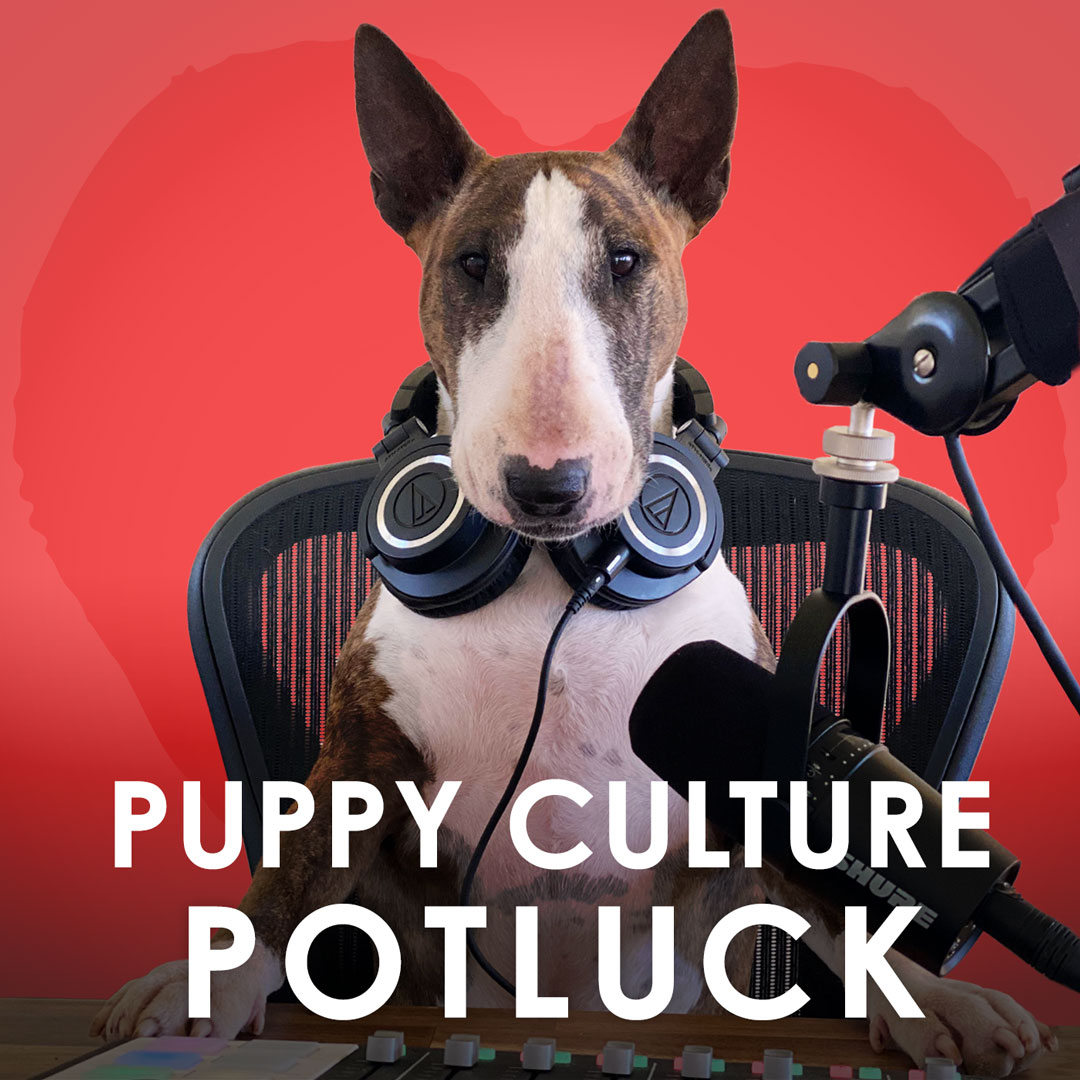
Puppy Culture Potluck SeriesYou bring the topics, we bring the discussion.
No time to read our Puppy Culture Discussion group every day? No problem! Now you can get highlights of the discussion group in podcast format.
I’m going to be grabbing questions from the discussion group that sparked interesting discussion and talk about them on air.
Who knows, some guests may drop in as well…
|
The breeder comments on this thread were thought-provoking and brought us to some slightly uncomfortable places, which I really enjoyed. I think you’re going to enjoy listening to it just as much as I enjoyed recording it!
Listen wherever you get your podcasts, and subscribe so you never miss an episode!
    
   
To read the transcript for this episode, click the link below.
 Transcript - Episode 53I'm Jane Messineo Lindquist., and this is a Puppy Culture Potluck podcast. You bring the topics, we bring the conversation. This week's episode is part two of our conversation about how we, as breeders, can minimize the chances of puppies being returned to us. Last week we read the question and I gave you my general thoughts on how we maximize our puppy placement success. But there were so many good comments from other breeders that raised so many interesting questions that I've broken it off into its own episode. So if you haven't listened to part one of this, it's episode 52 Avoiding Getting Puppies Back part one ideas for better placements. But here we go with the breeder comments on this post, and I'm going to disclaim at the top that I'm going to be reading a lot of comments that the opinions in these comments are not necessarily the opinions of Madcap. They're the opinions that are out there that I thought were worth at least airing because it's food for thought. Okay, so I'm going to be ranging a little bit here, and I'm not necessarily always making recommendations, but I also am not always necessarily going to be clear. Like this is my opinion and this is not. So take it for what it's worth. If I'm reading someone else's comment, it's their opinion, not necessarily mine. Here's one. Unfortunately, in Min Pins, returns are somewhat common. People think they understand the work and intensity of them, but oftentimes they really, truly don't. Two high energy, two crazy, two nippy two whatever lol. I know someone who had a puppy returned because it killed a mouse. Like yeah, it's a min pin. It's part of the breeding game and unfortunately not every puppy ends up in their perfect home. This is especially common with common breeds like your Labrador, because people think they know what they want and sign up for, but truly end up either out of their depth or being unable to handle the long term training and socialization required. Okay. Me again. Yes, I am not one to romanticize the good old days. I remember growing up with dogs. I remember being bitten by dogs. I remember dogs getting hit by cars. I remember how people treated dogs routinely in ways that we would consider really unethical today. However, that having been said, it is true that the modern sensibility does not have any sense of what the dog is as an animal, and that's a challenge for us as breeders. This woman's story of a min pin being returned because it killed a mouse. Yeah. I, people think that with training and socialization and going to a good ethical breeder, they're not going to get an actual dog. They think they're going to get something that they've cherry picked, all the things that they think are cute and funny about the dog, and none of the real animal in a dog. I mean, they're animals and they're living in our houses, and there has to be some allowance for that. But increasingly in this modern world, there really isn't. And again, I think it was an astute observation that this breeder made that when you're breeding a breed like a Labrador, which, what do we say, Larry the Labrador? The easy dog. The Labrador. Well guess what? It's a hunting dog. It's not, you know, a little, a couch potato lap dog. So it does have real needs. It has real emotions and real energy of a dog. So, I don't know the answer to this, but excuse me. A lot of breeders commented. It's true that modern sensibilities often are not in accord with the reality of any dog. So when it comes to that, I mean, this is just a screening, process. That's the only defense you have against this is that your screening process has to be good enough, and you have to ask the probing questions of people that will reveal these, unrealistic expectations. I think a lot of breeders, especially newer breeders, are somewhat bashful about asking really probing questions like, well, what? What would you do if your dog attacked another dog? Or what would you do if your dog killed a cat? What would you do if your dog turned out not to be the kind of dog that could go to your cousin's country house on the weekends and run with other dogs? What if your dog winds up hating the dog that you have now? Nobody really wants to ask these questions of puppy owners, because we don't want to scare them off or imply that our dogs are of that defective quality, that they're going to be like that. And I'm not saying that it's defective for dogs to be like that. I'm saying the perception is that that's a defective dog, but this is the reality of dogs. And my question when I place a puppy with someone is, do you have what it takes to go the distance with this dog? You know, the bull terrier is a dog that can either bond very strongly with things like cats and rabbits and geese, and there's lots of videos on TikTok and Instagram of the bull terrier with the chickens and the dogs. And yeah, we all want that. But it's not a deliverable for me as a breeder. It's not a deliverable. I breed toward it. I love it when it happens, but I want to know Mr Puppy buyer, what are you going to do if you can't have your bull terrier with the chickens? So again, I think breeders sometimes are afraid of scaring people off, but I think we really do have to ask these questions. What would you do if ... and then name some scenarios that would seem off putting, but are within the tolerance of natural and normal behaviors for a dog? And I have to give credit to my husband for this, because, you know, after doing this for a couple decades, I'll never forget these people came in for a puppy and he just sort of just turned around, apropos of nothing, and said, what are you going to do if this puppy hates your other dog? And I was like, wow, that's rough. But you know what? It kind of rocked the people back on their heels a little bit. And those particular people were like, well, yeah, we'd keep them separate. We'd love them both. But it is the kind of thing that's going to flush out the posers, the people that just want a dog park nation dog and don't want a real, living, breathing animal that may have some limitations that don't fit in with their lifestyle. These are the people that you want to avoid because they're going to return that dog the second it doesn't fit in with that lifestyle. Now, let me say two things here. Number one, I do think a lot of breeders, even on a subconscious level, are playing the odds when they place puppies. Meaning to say, hoping that even if maybe these are sort of dog park nation lifestyle people, they don't want to ask that question about what would you do if this dog doesn't get along with your other dogs because they're banking that the people are going to bond with the dog, and then they're just going to deal with the problems, and those breeders don't want to ask those pointed questions, because they really may turn off some people. And I do understand how these breeders feel, because this could be a perfectly good home that they're turning away or turning off unnecessarily. I get it, but all I'm saying is, if you haven't asked those probing, difficult questions of your puppy owners and then they return a puppy when it doesn't fit in with their lifestyle, it's entirely possible that the puppy owners bamboozled you, but it's also maybe time for a little self-examination about your screening process and how rigorous you're really being when you screen puppy owners. Now, in case I have any Dog Park Nation puppy owners listening to this, I'm not here to tell you that you should want something different than what you want. If it's really important to you that you have that dog that can go to a beach house with ten other dogs and half of them are reactive and one has a injured back, and if something jumps on it, it's going to growl. And there's three toddlers walking around and teenage kids playing lacrosse in the yard, and you have to have a dog that can go into all that off leash and come when called. I'm not hating on it, but I'm telling you, don't get a puppy. 100% of any breed. Do not get a puppy. Get an adult dog that is over the age of three that you absolutely know that it can do all the things that you want it to do. Because puppies are a black box of genetics. You will only see a portion of what's there. You don't know how that puppy is going to grow up. And I'm talking about the from the most primo breeder. We do not control the trajectory of how those genetics are going to explode out of that little black box of a puppy that we hand you. I've had this conversation many times with other dog trainer friends. Those of us that like to do performance with our dogs. You know, it's a frustrating thing because we want to get a puppy and start it, right? We want to be training those puppies for that high level performance career. But the downside of that is you really don't know if that dog is going to have the temperament that it takes to be able to do that. So again, as a breeder, if I'm placing a puppy with you, I'm not saying I don't like you or you don't deserve a dog if you want all those things. All I'm saying is it's not a deliverable. It's not reasonable. And if you are steadfast in your desire to have those things, you need to get an adult dog. Either a retired show dog or a rescue dog from an organization that isn't going to palm off the first reactive dog, that they can sort of keep a lid on and give you and tug on your heartstrings with, okay, that's verging into a different conversation, but I had to put that in there because I don't want any puppy owners that are listening to think I'm callous to their desires or their emotions. I'm not. I'm just trying to be realistic about how you're going to get what you want. Okay, another comment. My contract states that if a dog is returned for behavioral reasons, I do not refund. In my opinion, 99% of the time behavioral issues are the owner's fault. I have to spend time and money to fix something that the buyer broke. And there was more. But I'm going to cut it there because I think this is a really interesting theme that I'm seeing a lot with high level quality breeders, which is no refunds. I'm not saying yay or nay to this. I just think it's an interesting trend. And the reason these breeders are saying that they don't offer refunds is that their perception is that puppy owners, it's the Amazon effect, right? They can buy it. There's no consequence. They buy it. They have it while it's cute, and then they return it when it becomes inconvenient. And I definitely can see that. I have not experienced this personally, but I definitely can see how this could be a thing, especially in a more entry level breed. So at this time, I don't have a strong opinion about this, but I do find it to be interesting and I would say at least informative because it's not coming from nowhere. Okay. It tells me that there probably is a little bit of this Amazon effect with people, and it's yet another thing that you have to really screen for is are these people trying before they buy and just thinking they can return when all the fun part is gone? Another theme that I see that's adjacent to this is many breeders are now voiding health guarantees. If certain recommendations and protocols for things like feeding and exercise and veterinary care, vaccination, worming, deworming protocols are not followed. And yeah, I can understand I can understand that because if you're getting a Great Dane puppy returned with some kind of growth plate injury, and then you find out that the people ran it on cement for five miles a day when it was 12 weeks old, because their dog trainer told them, that's what they needed to do, you know, to calm the dog down. Yeah. I mean, that's not your problem. As a breeder, I shouldn't say problem. It's not your fault. As a breeder, it becomes your problem because the puppy owner did this. But it's not your fault as a breeder. And you should not be asked to absorb the emotional blame or the financial burden of fixing this problem. Here's the thing. And I'm just going to say it. I feel like we breeders, good breeders, have been told ground into us that we need to show up for our puppy owners, that a good breeder is there for the puppy owners, that we are responsible, that we help tests, that we produce better dogs. And that's true. But I think we've all gotten to the point where like, yeah, and now the puppy owners have to start showing up for us a little bit, meaning to say, you got to do what's in your contract and follow the feeding, training and veterinary care protocols. Otherwise, it's really not fair to blame a health issue or a behavior issue on the puppies genetics and expect the breeder to refund your money. Now let me be clear here. I'm not adjudicating any dispute between a particular puppy owner and a particular breeder, and there's good and bad eggs in both baskets. So this is not a universal, I'm talking about trends, okay? And I just do see a trend. And I don't disagree with it, where breeders are giving a little bit more pushback about puppy owners honoring the relationship with the breeder and following their advice. Listen, people don't like pet stores. They don't want there to be pet stores. But if you're going to treat breeders like a pet store, like I paid my money and I'm just going to take my puppy and leave, I mean, then you're part of the problem. Before I close this refund discussion, I just want to clarify that we're talking about refunds, okay? Not getting the dog back. The jury's out on refunds, but there's no debate. Unequivocally, it has to be in your contract that if anything happens and the puppy owner can't keep the puppy or the dog when it becomes a dog, the dog comes back to you. This is really what separates the sheep from the goats. When it comes to quality breeders. But you have to ask, if you don't give a refund, are you less likely to get the dog back? I'm not answering it. I'm just putting it out there because I get what these breeders are trying to accomplish, which is not getting the puppy back. And they feel, perhaps legitimately, that a no refunds policy or a no refund if the contract is not followed policy will obviate the necessity of refunds because the puppy will thrive and stay in the home. So it is a bit of a catch 22. And once again, for me, the jury's out on this, but it's something that I'm watching with interest. Okay, there were many comments that breeders are putting it in their contract that the puppy will be trained with positive only. Here's a typical comment. I have decided to add to my purchase contract that new owners are required to register their dog in a positive only training class, or to call upon the services of a professional trainer as soon as they bring the dog home. I breed Lagotto Romagnolo. They are a highly intelligent working breed who needs a lot of structured positive reinforcement. New owners tend to say they want to wait and see. Let the dog adjust to the change. A working breed with Puppy Culture priming. You need to hit the ground running and laughing. I always noticed people don't necessarily read the contract. Okay, we're going to come back to the positive thing because there was a lot of comments in that thread. As far as reading contracts, I definitely send my contract ahead before the people pick up the puppy. We go over it together on the phone again without the puppy being around, because once the puppy's there, it's like bombs are going off, love bombs are going off in their brain and they can't concentrate. So we have discussions outside of the presence of the puppies about the the contract terms. Then when they come to pick up the puppy, once again we go over the contract. I'm not saying that that means that they're necessarily going to abide by the contract, but at least you want to have conversations in a non distracting environment where you can focus on the contract and the terms, and also where the puppy buyer is not being unduly influenced by the presence of puppies to agree to something that they don't necessarily understand or agree to. So here's another good comment about the positive training. I used to recommend positive only for puppy classes, because my only priority for those is a positive experience. I found out how many unskilled, purely positive trainers are routinely recommending behavioral vets who routinely prescribe SSRI to puppies a couple months down the road when problems become unmanageable. I believe in primarily positive motivational based training that also clearly teaches healthy boundaries and fair, low stress consequences that are clear and make sense to the puppy. It's like threading the needle. You don't want your puppy to end up drugged and euthanized down the road. And you also don't want a heavy handed trainer flattening them. Okay, well, I think she's really advocating for balanced training, which I do not advocate for with puppies and I've had this conversation before. I've said it in podcasts before. You can have the debate about balanced training with adult dogs. I'm not going to get into that. But there is no debate with young puppies. There is no such thing as balanced training with young puppies as pure positive for puppies under 12 weeks old, there's no excuse for anything but positive reinforcement. That having been said. I do think this breeder is raising a good and valid point. I just don't necessarily think she's come to the correct solution. Okay, I'm going to slow this down here because I'm about to make some very fine distinctions that can easily be taken the wrong way. So I do want your full attention on this. This could really be its own podcast, but I think it's important to address it in this context. Just being a positive trainer does not mean that person has dog sense or is competent. There are good ones and there are bad ones. But being a positive trainer means that there's an acceptable limit on the amount and kind of damage that that trainer can do. You want a positive trainer based on a first do no harm ethos. And you know, the worst thing that's going to happen with a bad positive trainer is they're going to fail to train the puppy, but they're not going to irreversibly damage the puppy. And that's what's important. But I do believe the commenter is correct that positive trainers are quicker to go to medication. Not all positive trainers. But my observation is that on the population level, positive trainers will be quicker to go to medicating dogs and even young puppies. Again, just in my observation, a positive trainer who does not have dog sense or enough experience with different breeds at different ages or who is just plain incompetent as a trainer, is far more likely to erroneously label a dog as behaviorally abnormal and refer to a veterinary behaviorist, or suggest medication. And again, that's in comparison to your punishment or balanced trainers. Why is this? Well, my guess is that those positive trainers, particularly the ones that are identified very strongly as positive trainers, have a bag of tricks that they've been taught are acceptable. And when that bag of tricks is exhausted, the only philosophically acceptable possibility left for those trainers is that there's something wrong with the dog. So they label the dog as behaviorally abnormal and needing medication. Again, I'm not saying every pure positive trainer is this way, but some are, and it's a pitfall that appears to be peculiar to some extent to the positive dog training industry. You know, here's the thing. When you get yourself into an ideological place where your only tool is positive reinforcement, you have rejected the three other quadrants. Anything outside of that is inherently unethical to you. Then you had better be really, really good at using that one quadrant. And some or even many positive trainers are not really, really good at using that one quadrant. So their lack of training chops becomes the puppy's burden. Now your balanced trainer is less likely to go to medication, I think, because their bag of tricks extends to suppression, and they can really just flatten out a puppy in a way that most puppy owners, unfortunately, think is just dandy. Most puppy owners really cannot read how terrified and cowering their puppy is, nor can they possibly comprehend the long term negative consequences of that kind of training. So the puppy owner can't see the emotional state that this kind of training has created, but they can see very clearly that the puppy's no longer doing whatever it was that the puppy owner didn't like. So to them, the problem solved. And those puppies, I mean, at least at this point in their life, are not winding up at the veterinary behaviorist to be drugged because they've been suppressed so violently with training. So yeah, a balanced trainer might be less likely to put a puppy on screens, but in the scheme of things, I'd rather get back a puppy on Prozac than a puppy that's had a shock collar put on it. Because I can take a puppy off of Prozac, and in a month that puppy's back to baseline. If I get back a puppy that is cowering because it's had a shock collar on it, or even just repeated corrections, and that puppy is flattened and suppressed and potentially is going to develop fear and aggression issues. Well, now I've got a massive behavior modification project on my hands that could take months or years, and even potentially that puppy could be unplayable in the end. So I get the commenters frustration, and I don't think she's wrong in her observations, but I do not think that going to a balanced or punishment trainer is the solution. Not every positive trainer is going to be competent, but the potential downside is way, way less with a positive trainer. But tying this back into the conversation, what this means to you as a breeder is yes, you do have to help your puppy owner find a specific trainer. You can't just say go find a positive trainer. You need to do the research where they live and help set them up with somebody that you think is going to do a good job with your puppy. Let me just bring this home by saying the ultimate problem here is not balanced trainer versus positive trainer. It's that ultimately, when the puppy owner gets to a place of frustration with their puppy, they're looking for suppression and they're going to get it. Either they're going to get a toning down of the puppy with drugs, or they're going to get behavioral suppression with punishment. I just focused a lot on saying which of these two is the lesser of two evils, but we can't lose sight of the fact that the inflection point is before the puppy owner sets foot in that trainer's door. Okay. It's their expectations, because frustration with puppies almost always is expectations being incorrect. And that's where we as breeders, I mean, we just have to do everything we can to be the first resource that people turn to when they feel frustration with their puppy. Again, 90% of the time, a timely call to the breeder could head this all off at the pass. But then here's a contrary point of view. This breeder said you cannot dictate vets, trainers, etc. that is overreach. You can suggest going with honey, not a hammer when dealing with people. You'll get more cooperation. Well, this is an interesting comment to me because I don't feel it's overreach. I think it can be perceived as overreach, and I think it can be perceived as overreach by some good people if you don't present it the right way. As I said in the last episode, you have to position this for what it is, which is a benefit. This is a benefit of going to an ethical, responsible, high level breeder. You are getting our decades of experience with scores of puppies that you will never in your lifetime have our connections, our having been to every vet in the area and having friends that are breeders that live in your area, that know who the good vets are, that know who the good trainers are. It has to be positioned as a benefit and not an intrusion. And if the puppy owner is really the kind of puppy owner that just knows better and perceives this as an intrusion no matter how you position it, I don't think that's the puppy owner for you. Now, you may not care. You may be a libertarian when it comes to this kind of stuff, and that's fine. But if you're of a mind as we are, that's just not going to be the puppy buyer for you. So now saying from trainers to vets, here's a comment. I absolutely approve trainers. It is in my contract that I must approve them, and I contact them and I make sure they went. And I'm close to that point with vets. In my last litter, a puppy went home and as the puppy was starting to tease, a corporate vet said that that puppy needed a bunch of teeth removed. Quote or the adult teeth would not come in, unquote. And this was for an estimated $3,500. The owners wanted me to pay for it. A week later, the teeth were falling out and came in just fine. I like this next comment because I think it's got the right spirit. I put so much effort into encouraging my puppy homes to reach out immediately for absolutely any health or behavior issue. I tell them that I'll work in the background looking up every symptom, diagnosis, and prescription so that they know what questions to ask and can just focus on their pet. Vets vary wildly on their approaches to treating the exact same thing. At the end of the day, there's nothing we can do except try and get ahead of things and motivate them to keep an open line of communication while earning their trust. Okay. Me again. I think she's really hitting the nail on the head here. I think you have to be kind of straddling two things with puppy owners, okay? You do have to be a little bit how to say it, like blunt with them about your screening process so that you can, again, flush out those that are not serious, that just are dog Park Nation lifestyle people that are going to return the puppy to you when the going gets rough that aren't going to listen to you. But at the same time, you do have to be building trust in a relationship. So it's a delicate dance here, and I do think she's right. At the end of the day, the most important thing is that when the going gets rough, when something isn't going right, that that puppy owner is going to turn to you first so that you can guide them. That's really the most important thing. Okay, this one's a doozy. I have a buyers questionnaire which helps me screen out the non desirable buyers. That is your first step. And your next boundaries are. I breed for myself first. Then come the breeders. Then come the sports customers and pet owners are last. I do not offer guarantees. I only make educated guesses on genetics and other factors based on DNA and other assessments like OFA for the parents only. Then describe your terms for purchase and add this in your contract. Breeder not responsible for buyers lifestyle choices for this dog. So if they mess up, it's not your fault. Do you refund deposits? Sometimes things just don't work out. And how will you handle a bad owner situation? You cannot come in and take the animal. As the law says, it's the buyer's property, and that would be theft. So you need to think of as many situations as you can fall into, and it doesn't hurt to ask mentors to supply you with their experience. I learned my lesson about not putting in a clause about trainers. Pup was supposed to come board with me for two weeks while they were on vacation. Owner canceled the last minute to send to a local force trainer. She picked them because they're well known in the area due to a social media presence. It was a huge punch in the gut as I had previously worked as a force free trainer. They knew this and still chose not to ask for my help. There was nothing wrong with the puppy. She was just doing what Schnauzers do. I offered to buy her back because the behaviors they've complained about won't change, as they're breed specific traits. And who puts a prong and shock collar on a six month old? They're board and train was $8,000. They've since stopped communicating with me. And then somebody replied, did we sell puppies to the same person? I got photos of one of my puppies at six months old with a shock collar on. The owner wanted to show me how, quote, well-behaved, unquote, the dog was. They sent her to a board and train for a month to, quote, fix her bad habits, unquote. I didn't ask how much it cost. I was so mad because they never told me they were having issues. Like with all my puppies, I'd sent them training info, talked with other dog people to find good trainers in their area, offered to do FaceTime to help with training if they ever had any issues, and nope, let's just zap that baby. So there were a lot of responses on that thread of breeders with similar experiences where they placed a puppy, and then the puppy wound up going to a board and train that was a shock collar franchise. And, you know, the results were not good. So I think we can just put this to bed with the takeaway that insofar as possible, I do not think it's overreaching, I think you have to position it as a benefit and satisfy yourself as much as you can that that puppy owner has buy in, that they're going to be guided by you in their choice of dog trainer and their choice of veterinarian and veterinary care, because although I have not read them, I'm just going to summarize that there were a lot of comments in this thread from breeders who, you know, they had given very specific directions about limited vaccine protocols and what medications the dog could and couldn't have, and these puppies were literally being poisoned, being given multiple different systemic flea and tick medicine with a five way vaccine and a rabies vaccine at once. And then some, flea and tick medicines that have known neurological effects on puppies. Puppies dying from this. And as breeders, we really have to advocate for our puppies. And then there's this one less depressing. I've only had one come back after one night, and that was because the buyer was in an accident and injured their back and couldn't care for a puppy. I refunded except for the deposit amount, and we'll apply that to a future puppy should they choose to try again. Also, I buy the new puppy course from puppy culture for every buyer. When they pay their deposit, they get their course and they don't get the puppy until it's completed. And then a response. This is exactly what I do. I have not had a puppy back. I also insist that a puppy K before the puppy is taken home, and I have talked over with the new owner what puppy k they are using. I am happy to help them vet various programs if they need help choosing. Not saying it can't or won't happen, but I am very careful about puppy buyers. Okay, me again. As I said in the last episode, requiring your puppy owners to take an appropriate online puppy course before they pick up that puppy is key. We do offer a puppy course. It is the puppy course that I made for my puppy owners because I absolutely know what they need to know. And it's not all dog training. A lot of it is just dog mentorship. Expectations. How many people write in to puppy groups saying, I don't know my puppies biting me and doesn't want to cuddle up? It's so fundamental that puppies are not cuddly. It's the puppy paradox. They're cute, but they bite you. And if the puppy owner hasn't taken a puppy course or has taken a puppy course, that's just like, this is how you handle puppy biting that hasn't explained to them that this is what your expectation should be, that it's a developmental period, that it's natural, and that yes, you actually have to train your puppy to be calm. We call it puppy taming in our house. But even more than that, that even with all that training, it's not a problem that you're going to solve, okay? That this is what it is going to be like to have a puppy. And I think dog trainers are great. I'm a dog trainer, and I think that there are some extremely puppy savvy dog trainers out there. But I think the dog trainers bring the gift that they have, which is behavior modification. Okay. It's important. It's important to be able to learn how to train your puppy to do things. It's foundational, but I think the puppy owner needs to take a course that is going to teach them again, dog mentorship. What it is like to live with a puppy? What is reasonable to expect? I think that most puppy owners who are otherwise good people, if their expectations are set correctly, if they understand that it will pass, even if it's going to take a couple of years to pass. They're willing to wait. They'll be patient, but if they go into it not understanding that, and then find themselves in the thick of it and wondering what's wrong with this puppy, it's very difficult for them to sort of dig out of that emotional hole because their expectations were set wrong, and it's very difficult to recalibrate from that. You can find our course at puppyculture.com. As I've mentioned many times, we do give bulk discounts for breeders and breeders do get a dashboard where they can see if the puppy owners have in fact watched the course. And you know, if you have any questions, believe it or not, you can actually call us. Our phone number is 982928794. If you have any questions about products or what you think might work for puppy owners, or putting together packages for your puppy owners, you can call us and we'll help you out. And if you get my husband on the phone and you're putting together bundles for your puppy owners, he's a softy. He's probably going to give you a discount. So we talked about a lot of things that we at Puppy Culture provide for you breeders to put in your puppy packages. Number one, the puppy booklets available at puppyculture.com. We've got the spay neuter booklet. We've got the Be Your Puppies Advocate booklet, we've got the puppy exercise booklet, the puppy courses, bulk breeder discounts, breeder dashboard. We talked about that all available at puppyculture.com. If you need any help putting together puppy packages for your puppy owners, do not hesitate to call us at 908 2928794 or reach out to us through our website, puppyculture.com. Well, that's it for this time. Thanks for listening. Bye bye. Referenced Courses and Titles
0 Comments
Your comment will be posted after it is approved.
Leave a Reply. |

AuthorJane Messineo Lindquist (Killion) is the director of "Puppy Culture the Powerful First Twelve Weeks That Can Shape Your Puppies' Future" as well as the author of "When Pigs Fly: Training Success With Impossible Dogs" and founder of Madcap University. Archives
September 2026
Categories |


